
Sectra vs Medicai for Cloud PACS
Most radiology teams evaluating Sectra versus Medicai face a simple question: which cloud PACS keeps images accessible without forcing IT staff to manage servers or storage growth. The choice now matters because many platforms still tie access speed to local hardware limits and create delays when multiple sites need the same study at once.
By the final section you will know exactly how each platform handles storage scaling, what security steps each one requires, and which pricing model fits a multi-location practice versus a single hospital. The verdict will tell you which option matches your current workflow and which one will push you toward extra workarounds later.
Quick Verdict: Sectra vs Medicai for Cloud PACS
Sectra offers an established on-premise and cloud PACS suite while Medicai delivers a zero-footprint, cloud-native DICOM viewer. Organizations evaluating both solutions face a clear architectural decision that shapes their entire radiology workflow.
Medicai prioritizes rapid cloud deployment and API-driven integrations. This approach eliminates hardware maintenance while enabling immediate access across multiple sites. The platform processes medical imaging through Microsoft Azure infrastructure that meets HIPAA and GDPR compliance standards.
Sectra combines on-premise hardware with optional cloud modules for facilities that prefer hybrid infrastructure. This approach requires dedicated IT resources to maintain physical servers and manage local storage systems.
The choice hinges on whether an organization wants a fully managed cloud workflow or a hybrid infrastructure that retains on-premise components. Cloud-native solutions typically reduce deployment time and ongoing maintenance requirements compared to systems that depend on local hardware.
Medical imaging departments processing high volumes of DICOM studies often find cloud platforms more scalable during peak demand periods. The fully managed approach also simplifies disaster recovery through automated backup systems hosted on redundant cloud infrastructure.
At a glance: how Medicai compares to Sectra, Medicai for Cloud PACS on the features that matter most.
| Feature | Medicai | Sectra | Medicai for Cloud PACS |
|---|---|---|---|
| Cloud PACS | ✓ | ✓ | ✓ |
What Is Medicai?
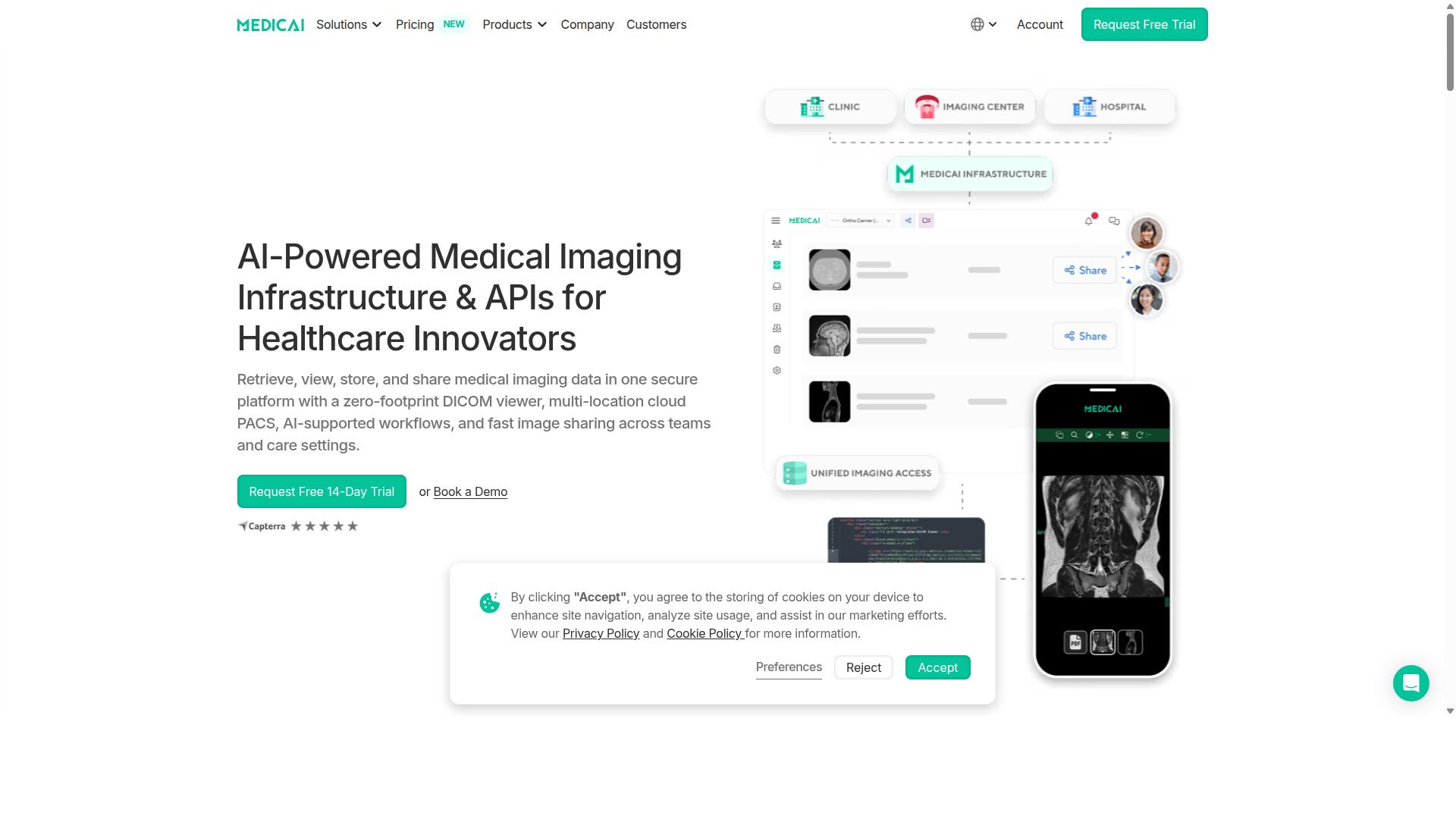
Medicai is a cloud-based medical imaging platform that lets providers retrieve, view, store, and share DICOM data from a single secure interface.
The platform features a zero-footprint DICOM viewer that runs directly in any standard web browser. Healthcare teams can access studies without software installation or local hardware requirements.
Users can upload medical imaging studies straight through the web browser interface. This eliminates the need for specialized client applications while maintaining full DICOM compatibility.
All data transmission and storage uses automatic encryption that meets HIPAA and GDPR requirements. Medical facilities receive compliance-ready security without additional configuration steps.
The service operates globally and supports multi-location cloud PACS deployments. Organizations can connect imaging workflows across different geographic sites through one unified system.
Medicai functions as Imaging Infrastructure as a Service that modernizes medical imaging workflows. The platform focuses on interoperability between systems and care settings.
What Is Sectra?
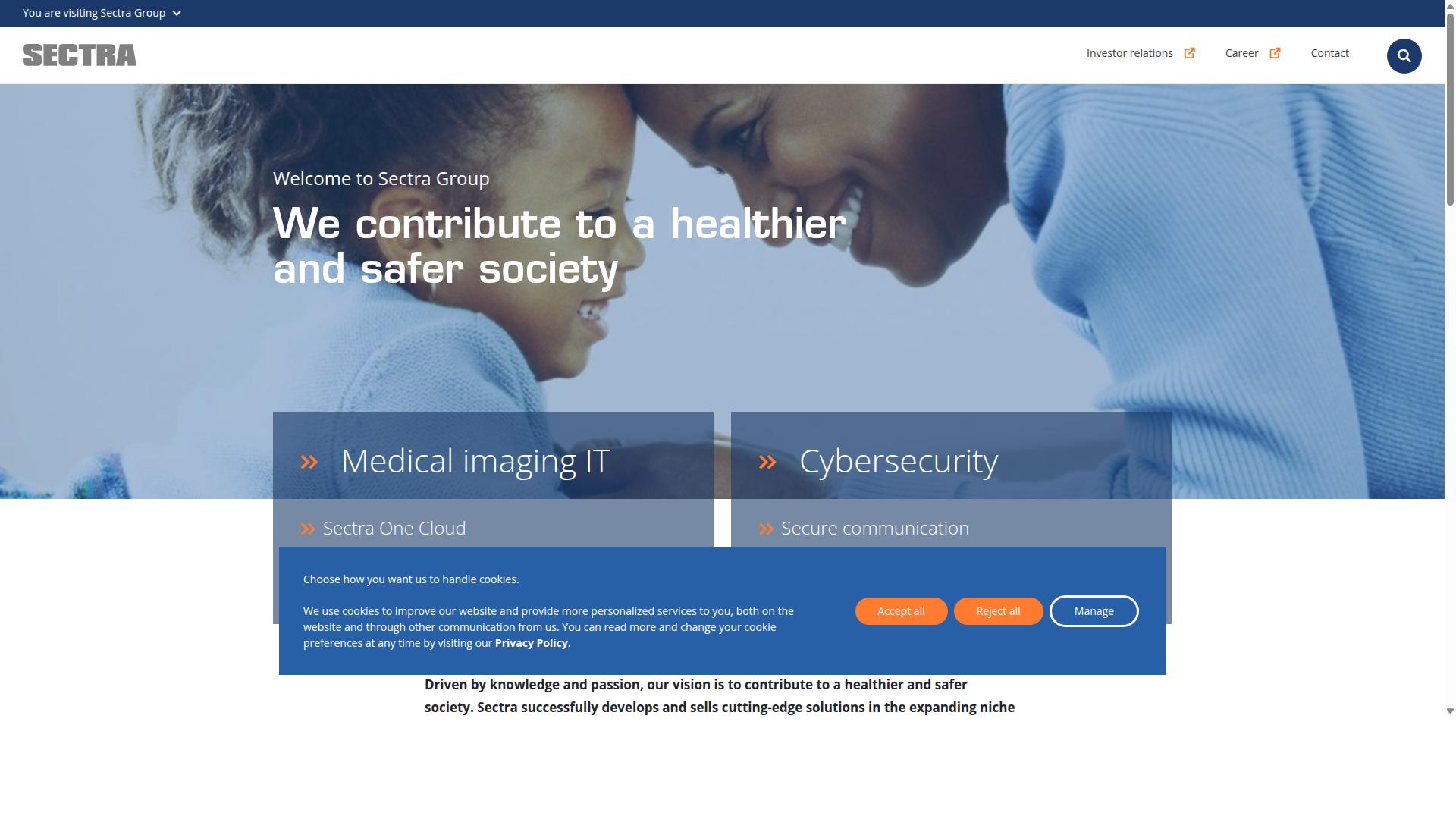
Sectra is a long-standing radiology IT vendor that supplies on-premise PACS, RIS, and optional cloud extensions for image archiving and enterprise workflow.
Organizations often choose Sectra when they need a hybrid infrastructure that blends local servers with cloud storage. This approach supports multi-site deployment while maintaining control over critical data centers.
Many hospitals value Sectra for its established presence in medical imaging environments. The platform handles DICOM studies, supports HL7 and FHIR standards, and offers integration with existing RIS and EMR systems.
Healthcare providers also consider disaster recovery options and data security protocols when evaluating Sectra. These features help meet HIPAA and GDPR compliance requirements in regulated environments.
Some facilities explore whether a fully managed SaaS platform might simplify operations compared to maintaining hybrid infrastructure. This consideration often leads organizations to evaluate cloud-native solutions that reduce local hardware dependencies.
What Is Medicai for Cloud PACS?
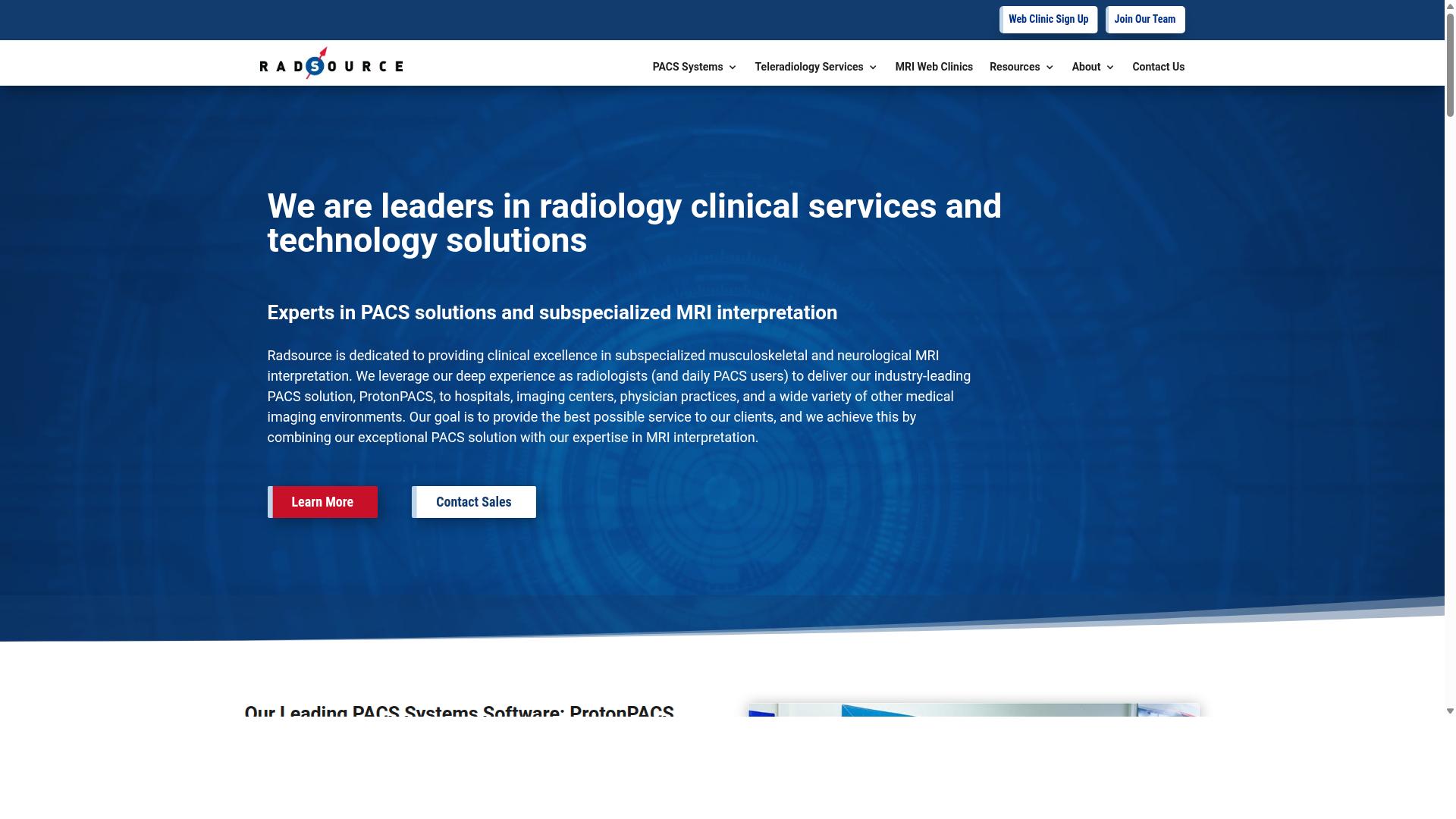
Within the Cloud PACS category, Medicai functions as a vendor-neutral archive that consolidates studies from any modality into one searchable cloud repository. Studies are stored once and accessed anywhere.
The platform currently maintains 1.7M+ studies in its archive. It delivered 300k+ visualizations during the past year.
Medicai offers multiple connection options that include a Medical Imaging Uploader and a DICOM Gateway. These tools bring images from different sources into a single cloud location.
Storage services cover Cloud PACS, Medical Image Exchange, Patient Case Management, and Vendor Neutral Archive functions. Backup and Disaster Recovery options protect data against loss.
Access and collaboration tools include a DICOM Viewer, Doctor Imaging Portal, Patient Imaging Portal, and Mobile Imaging App. Doctors can review images from any location with an internet connection.
Additional capabilities feature Structured Reporting for Radiology, Medicai Imaging API, and support for Tumor Boards. These features help teams share cases and maintain consistent documentation across different sites.
AI Powered Diagnostics and Radiology AI Co-Pilot provide optional assistance for image analysis. Integration with existing systems supports radiology workflows without requiring major infrastructure changes.
Features Compared
The following two capability areas highlight where the platforms differ most for cloud imaging workflows.
Storage capacity and security standards directly affect how fast images move across radiology departments. Organizations evaluating Sectra and Medicai need to weigh monthly pricing tiers against regulatory requirements before committing to a Cloud PACS vendor.
Comparing these dimensions reveals practical differences in deployment speed and audit readiness that influence daily radiology workflow.
Storage & Scalability
Storage and scalability metrics determine how quickly images reach clinicians across locations.
Medicai offers a Starter tier that includes 500 GB of cloud storage and unlimited user accounts for $249 per month with monthly billing. The Standard tier expands this to 2 TB of storage and one connected location for $749 per month.
Additional locations require the Enterprise tier, which provides custom storage volumes and supports multiple external sites. This tier structure allows smaller radiology groups to begin with predictable costs while larger health systems scale without changing vendors.
The platform runs on an API-first architecture that supports 50M+ transactions annually. This capacity enables rapid image retrieval across connected sites without adding on-premise servers.
Sectra typically requires infrastructure planning that can extend deployment timelines. Medicai uses a subscription model that removes upfront hardware purchases and allows radiology teams to start within days rather than weeks.
Security & Compliance
Security and compliance certifications protect patient data and satisfy regulatory audits.
Medicai maintains HIPAA and GDPR compliance along with FDA and CEE cleared viewers. All data remains encrypted both in transit and at rest to meet current healthcare security standards.
Audit logs record every study access and support the documentation needed during compliance reviews. These built-in logging features help radiology departments demonstrate proper handling of medical imaging records.
Sectra also addresses security requirements, yet Medicai bundles compliance certifications directly into its subscription pricing. This approach reduces separate licensing fees that organizations might otherwise pay for regulatory tools.
Both platforms follow encryption best practices, but Medicai integrates these controls into a single monthly plan that covers storage, access management, and audit reporting.
Pricing Compared
Pricing models differ sharply between a subscription-only cloud platform and a hybrid vendor. Medicai offers fixed monthly tiers that eliminate surprise invoices. Sectra typically structures deals around hardware commitments plus software licensing.
Starter costs $249 per month and includes 500 GB cloud storage with unlimited user accounts. This tier suits practices that need basic image archiving without connected locations. A 14-day trial lets teams test the full feature set before committing.
Standard costs $749 per month and provides 2 TB cloud storage plus one connected location. Unlimited accounts remain available, which supports growing radiology groups that share studies across a single site. Yearly billing reduces each tier by 15 percent.
Sectra pricing involves capital equipment purchases or multi-year contracts that bundle servers, workstations, and maintenance. Exact figures depend on deployment scope, making direct cost comparisons difficult without a formal quote.
Both vendors handle DICOM studies, yet Medicai lists per-study pricing as an enterprise option for high-volume centers that prefer usage-based billing. A one-time $1,000 DICOM Gateway setup fee applies per location when additional sites connect.
Who Should Choose Medicai
Medicai is aimed at healthcare providers that need an immediately deployable cloud PACS without on-premise hardware. Specialty care providers benefit most from this approach, particularly those in orthopedics, neurology, oncology, radiology, cardiology, ophthalmology, ob-gyn, pulmonology, dentistry, and gastroenterology.
These practices often work across multiple locations and require reliable image access without managing servers or maintenance schedules. Cloud deployment eliminates the need for local IT infrastructure while maintaining HIPAA compliance and GDPR compliance for data security.
Virtual care providers and telemedicine platforms also find value in a system that supports remote image sharing and patient portal access. Medical education organizations and clinical trials benefit from centralized image archiving that scales with project demands.
Personal injury lawyers and tumor boards need consistent access to medical imaging across different facilities. Teleradiology services gain from global online availability that supports image retrieval regardless of location or time zone.
The platform serves hospitals, imaging centers, and multi-site deployments through subscription pricing that avoids capital equipment costs. Zero-footprint viewer technology enables mobile access without additional software installation at each location.
Research suggests that organizations prioritizing rapid deployment and reduced infrastructure management find cloud PACS solutions like Medicai more practical than traditional on-premise alternatives. The combination of VNA capabilities and RIS integration through HL7 and FHIR standards supports existing workflows without major system overhauls.
Who Should Choose Sectra
Sectra appeals to hospitals and imaging centers that already run on-premise infrastructure and require tight RIS integration.
Hybrid deployment models let facilities keep sensitive data locally while extending access to remote clinicians. This approach works when existing servers already handle high-volume studies and uptime standards remain non-negotiable.
Existing RIS connections often dictate vendor choice for large health systems. Organizations that invested years in custom interfaces find migration costs outweigh potential cloud benefits.
Regulatory environments sometimes favor controlled environments over public cloud options. Facilities with strict internal policies around data residency continue to value on-site control.
Multi-site networks with reliable bandwidth can manage image retrieval across locations without latency concerns. When every facility shares the same network backbone, on-premise solutions maintain acceptable performance levels.
Established workflows built around specific PACS viewers create resistance to change. Staff training requirements and workflow disruption often outweigh feature improvements offered by newer platforms.
Who Should Choose Medicai for Cloud PACS
Organizations that need a vendor neutral archive with seamless HL7 and FHIR connectivity should evaluate Medicai for Cloud PACS.
Groups that handle high volume image exchange and demand reliable data access will find value in the platform. The system processes more than 50 million API transactions each year, supporting busy radiology departments and multi site networks.
The DICOM Gateway simplifies transfer of studies from existing modalities and PACS into the cloud archive. This tool removes the need for manual uploads and keeps workflows running without interruption.
Teams that require structured patient data alongside images gain from the Patient Case Management tools. These features allow direct connections to EMR and RIS platforms, keeping clinical information in one accessible location.
Hospitals planning migrations from on premise systems can use the Vendor Neutral Archive to consolidate studies without locking data to a single vendor. The cloud storage layer scales as case volume grows, removing the need for hardware upgrades.
Facilities focused on teleradiology and remote collaboration benefit from the Doctor Imaging Portal and Patient Imaging Portal. These portals support secure image review across locations while maintaining compliance with data protection standards.
Final Verdict
The final decision rests on whether a practice prioritizes instant cloud access and transparent subscription pricing or prefers a hybrid infrastructure.
Medicai processes more than 1 million studies per year and maintains 1.7 million studies in storage. These numbers demonstrate consistent capacity and reliability for cloud-based image archiving.
The platform holds both FDA clearance and CEE clearance. These certifications confirm compliance with medical device standards across multiple regulatory regions.
Practices seeking a zero-footprint viewer and mobile access often favor cloud solutions. This approach eliminates local server maintenance and simplifies multi-site deployment.
Hybrid users may prefer on-premise components for certain workflows. Cloud PACS adoption continues to grow as bandwidth improves and security standards mature.
Medicai USA operates at 7901 4th St N, STE 300, St. Petersburg, FL, 33702. Contact the team at +1 (832) 220 1035 to schedule a tailored demo.
Medicai Romania is located at 53-55 N Filipescu, 5th Floor, Sector 2, Bucharest, 020961. Reach European sales at +40 316 305 875 or email [email protected].
Recommended Resources: